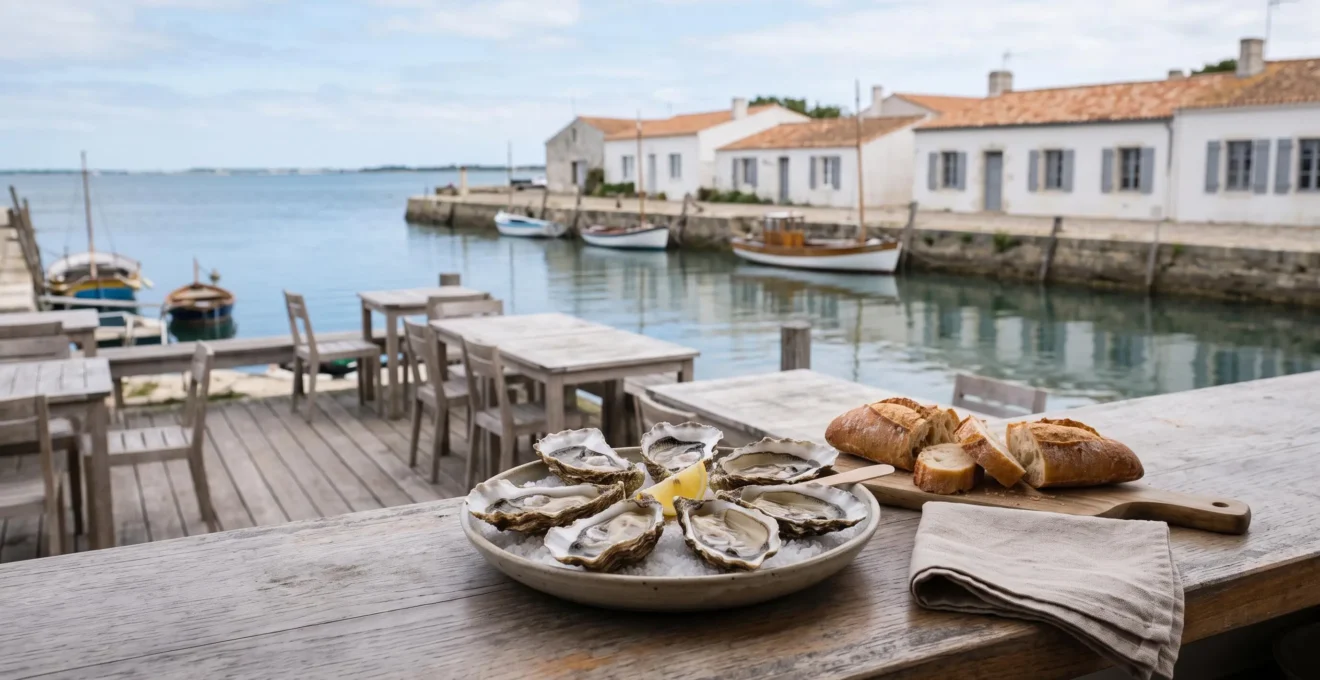
Île de Ré is a rewarding destination for food lovers, thanks to its fresh oysters, Atlantic seafood, protected-origin potatoes, traditional sea salt and lively village markets. This island off France’s Atlantic coast offers more than memorable meals: visitors can meet producers, explore food markets and discover how the surrounding sea and salt marshes shape local flavours.
A satisfying culinary visit combines a morning market, a seasonal speciality and an experience connected to the island’s producers. Knowing which foods are genuinely associated with Île de Ré, where to find them and how availability changes throughout the year makes planning much easier.
Start with Île de Ré’s food markets
Village markets are an excellent introduction to the island’s food culture. Depending on the season, stalls may offer fresh vegetables, seafood, cheeses, prepared foods and regional specialities. They are also useful places to ask producers about ingredients, harvesting methods and the origin of what they sell.
Each market has its own character. Rather than trying to visit them all, choose one that suits your itinerary and the atmosphere you prefer.
| Market | What makes it distinctive | Best suited to |
|---|---|---|
| La Flotte | Medieval-inspired market setting | A scenic morning shopping experience |
| Le Bois-Plage-en-Ré | The island’s largest market, according to the tourist office | Browsing a broad selection of produce |
| Ars-en-Ré | Lively village atmosphere | Combining food shopping with village exploration |
| Loix | A quieter village setting | Enjoying a more relaxed market visit |
Market schedules change with the season, and each village offers a different atmosphere. The official tourist office’s guide to Île de Ré markets is a useful starting point for comparing locations and checking arrangements before your visit. Summer opening patterns should not be assumed to apply in winter.
Taste the island’s oysters and seafood
Oysters are among Île de Ré’s most characteristic foods. Oyster farming is closely connected to the island’s coastal landscape, and tasting oysters near their production areas offers a different experience from ordering them in a conventional restaurant.
Oyster huts, often known locally as cabanes ostréicoles, can be found around areas such as La Flotte, Loix and Les Portes-en-Ré. Some welcome visitors for tastings, although their services and opening periods vary. If the experience matters to your trip, check whether a particular hut offers on-site tasting rather than assuming every production site serves meals.
Fresh oysters are commonly enjoyed simply, allowing their marine flavour to take centre stage. Those who prefer cooked dishes can look for mussels, fish, clams or other seafood preparations. Asking about provenance is worthwhile: a seafood dish served on Île de Ré is not necessarily made entirely from locally harvested ingredients.
Oysters, mussels and other seafood belong to a wider culinary tradition along France’s western coast, so not every regional dish is exclusive to Île de Ré. France’s national tourism guide to Atlantic coast specialities provides useful context for understanding that distinction.
Try the famous Île de Ré potatoes
The island’s potatoes deserve a place alongside its seafood. Pomme de terre de l’Île de Ré holds the French AOP designation, equivalent to the European Protected Designation of Origin (PDO). This recognition identifies potatoes produced according to a defined geographical and production specification; it does not automatically cover every new potato sold locally.
These early potatoes are especially associated with spring and the beginning of the summer season. Their appeal lies in their distinctive character and the pleasure of eating a seasonal local product.
A simple preparation is often enough: gently cooked potatoes with a little butter and salt can accompany grilled fish or another seasonal dish without overwhelming the ingredients.
Look for the designation: The AOP/PDO name identifies potatoes covered by the protected product specification. It does not apply automatically to every new potato offered on the island.
Discover salt, fleur de sel and samphire
Salt marshes are another defining feature of Île de Ré’s food landscape. Traditional salt production depends on seawater, sunshine, evaporation and the work of salt harvesters, known as sauniers. The process connects the island’s natural environment directly to its cooking traditions.
Coarse sea salt and fleur de sel are not simply two names for the same product. Fleur de sel forms as delicate crystals at the water’s surface and is carefully skimmed off. Other sea salt crystallises within the salt basin and is collected differently. Fleur de sel is particularly suited to finishing dishes when its texture can be appreciated, while ordinary sea salt is useful for general seasoning.
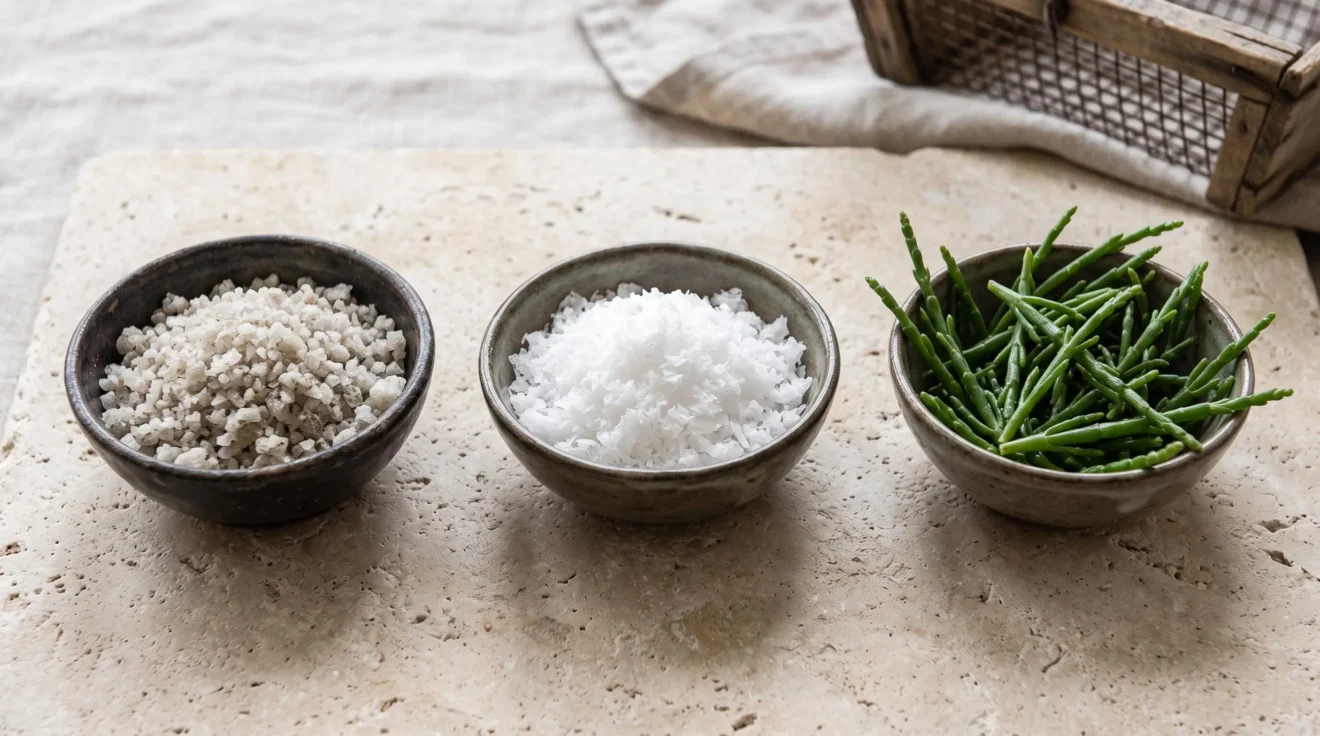
The combined designation “Sel de l’Île de Ré / Fleur de sel de l’Île de Ré” was registered as a Protected Geographical Indication (PGI) on 24 November 2023. France’s geographical-indications authority explains the protected Île de Ré salt designation, helping visitors understand what the geographical name signifies rather than treating it as a general quality ranking.
Another ingredient associated with the salt marshes is salicorne, known in English as samphire. This edible, salt-tolerant plant has crisp, succulent stems and can appear in salads, vegetable accompaniments or preserved preparations. Its distinctive salty character makes it an interesting addition to a seafood-focused meal.
Explore local wines and regional drinks
Île de Ré also has vineyards, making wine another part of the island’s agricultural identity. Visitors interested in local production can look for wines whose labels identify their origin and ask producers about the varieties and styles available.
Pineau des Charentes, a regional fortified wine, and Cognac belong to the broader Charentais drinking tradition. Their appearance on an island menu does not necessarily mean they were produced on Île de Ré. Distinguishing island-made products from regional specialities gives a clearer picture of local gastronomy.
Wine tasting is entirely optional. Market fruit, fresh juices or water can accompany an equally enjoyable food-focused visit.
Choose the right place to eat
A memorable meal depends as much on the type of experience as on the dish itself. Oyster huts are well suited to visitors who want to focus on oysters and their production setting. Seafood restaurants offer a wider choice of preparations, while casual bistros can be convenient for mixed preferences or a relaxed evening meal.
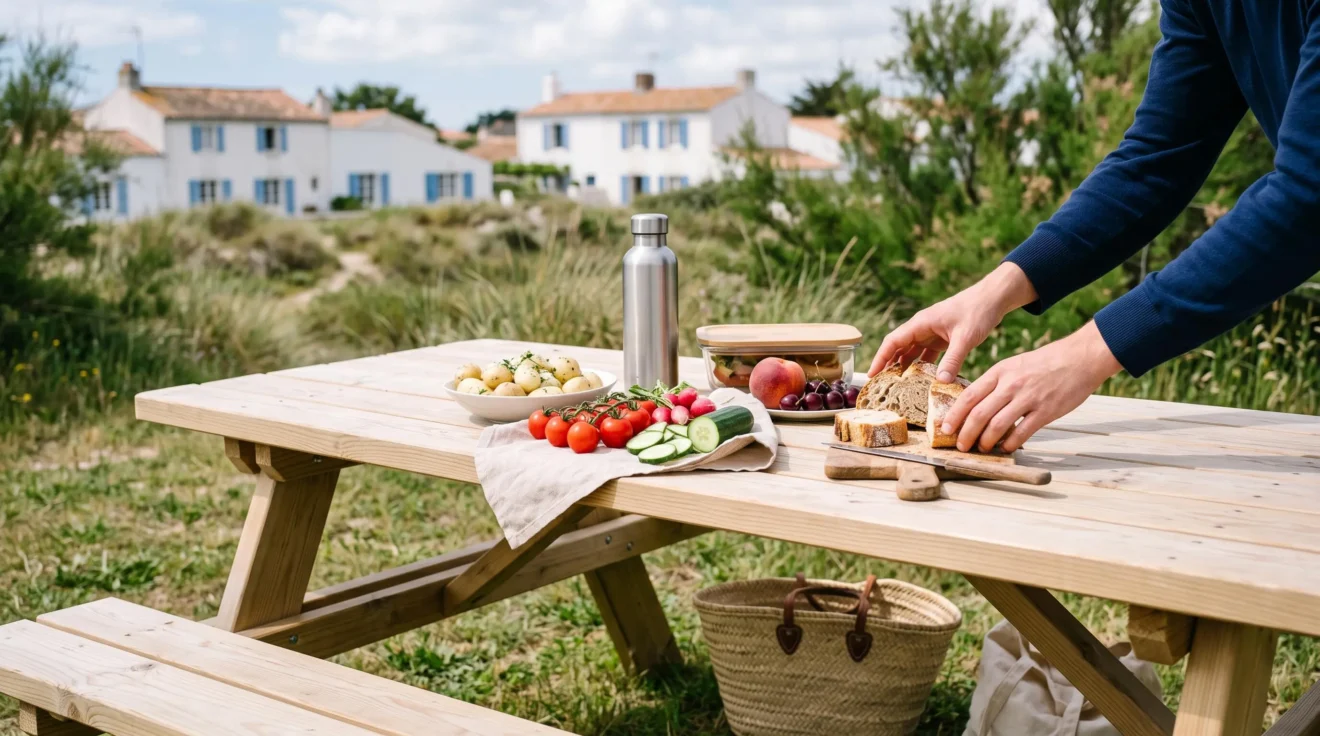
A picnic assembled from market purchases offers another option, particularly when the weather is pleasant. Fresh bread, seasonal vegetables, fruit and prepared local foods can make a satisfying meal without requiring a formal restaurant reservation.
- Check whether the menu offers raw oysters, cooked seafood or both.
- Ask about seafood origin when provenance matters to your choice.
- Confirm seasonal opening arrangements and whether reservations are needed.
- Consider weather, seating and any dietary requirements.
These simple checks help you select an experience that suits your tastes rather than relying on an unverified best-restaurant claim.
Plan a food-filled day on Île de Ré
You do not need an elaborate itinerary to experience the island’s culinary character. A manageable day can combine shopping, tasting and one activity connected to local food production.
- Morning: Browse a village market, discover seasonal produce and select a few ingredients for later.
- Lunch: Choose an oyster tasting or a cooked seafood meal, depending on your preferences.
- Afternoon: Visit a salt-marsh or food-producer experience if a suitable visit is available.
- Evening: Finish with a relaxed restaurant meal featuring seasonal ingredients.
Keep the sequence flexible. Market opening days, producer visits and restaurant services may change with the season, while the most convenient order depends on where you are staying. Choosing experiences within a manageable part of the island can leave more time to enjoy them.
Before setting out, confirm the specific market’s opening arrangements and check whether any planned producer visit requires advance booking. If you are travelling outside the busiest season, let what is actually available guide your choices rather than building the day around a fixed schedule.
For food lovers, Île de Ré is best experienced through its connections between land, sea and local producers. Start with a village market, choose a distinctive speciality such as oysters or protected-origin potatoes, and leave room for an unhurried meal. A little attention to seasonality and provenance can turn a short island visit into a richer culinary experience.